Humanising English language teaching: ChatGPT as a reflective partner
Humanising English language teaching: ChatGPT as a reflective partner
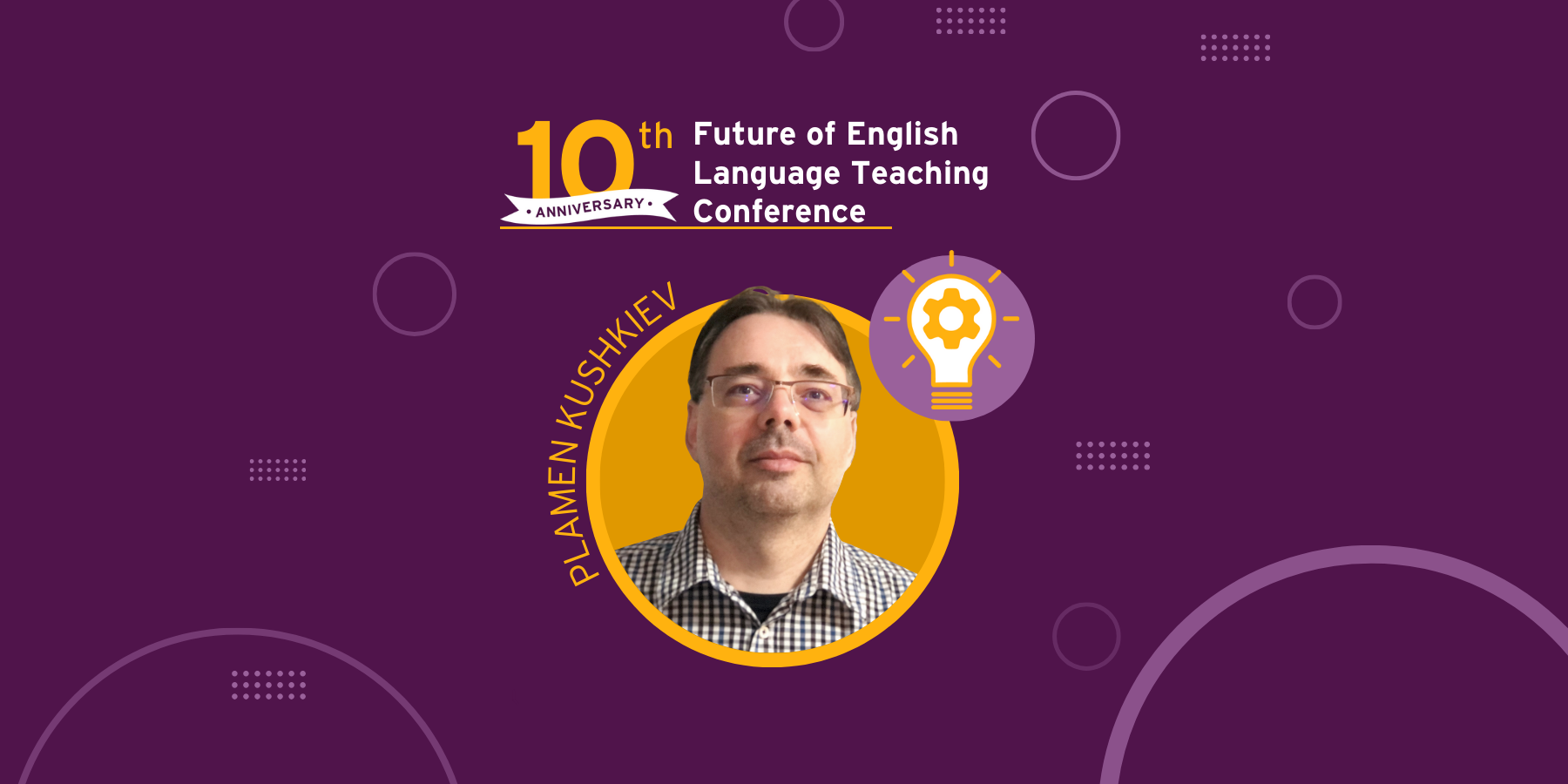
At this year’s Future of English Language Teaching (FoELT) conference, Dr Kushkiev explored how generative AI can become a partner in reflection and teaching development rather than a replacement for human educators. His session focused on using ChatGPT to foster critical AI literacy and support more human-centred teaching practices in English for Academic Purposes (EAP) contexts.
Dr Kushkiev is a Canadian college professor, researcher and SoTL Scholar Award recipient. He holds a doctorate in higher education from the University of Sheffield, UK, and currently teaches English for Academic Purposes at Centennial College in Toronto. His research examines how generative AI can enhance teaching performance and learner engagement through critical AI literacy.
AI as a reflective partner
Dr Kushkiev began by acknowledging the growing influence of generative AI tools like ChatGPT in education. Rather than viewing these technologies solely as content generators, he proposed reframing them as reflective partners that can help teachers analyse, question and improve their pedagogical decisions.
Drawing on his autoethnographic research conducted in two Canadian community colleges, he described how he used ChatGPT to document, question and re-evaluate his classroom practices. Through ongoing dialogue with the AI, he gained insights into lesson design, assessment construction and learner engagement.
This reflective use of technology, he argued, supports teachers in thinking more critically about their choices and assumptions, while also highlighting areas for growth.
Understanding critical AI literacy
A central theme of the session was the concept of critical AI literacy, or CAIL. Dr Kushkiev defined this as the ability to understand, question and make informed decisions about how AI tools are used in educational contexts.
He discussed how developing CAIL allows teachers and learners to move beyond the surface-level use of AI for efficiency. Instead, it encourages reflection on issues such as bias, transparency and human agency in digital learning environments.
By engaging critically with AI, educators can ensure that technology enhances human interaction rather than diminishing it.

Key findings from the research
Through thematic analysis of his reflections and interactions with ChatGPT, Dr Kushkiev identified three major outcomes:
- A re-conceptualisation of critical AI literacy in his own teaching practice
- A renewed understanding of formative assessment as a process of collaboration and learning rather than evaluation alone
- A deeper sense of learner partnership, where students contribute to co-creating assessments and class materials
These outcomes suggested that engaging with AI reflectively can lead to more responsive, inclusive and learner-centred teaching practices.
Collaboration and human focus
Dr Kushkiev emphasised that technology should always serve to humanise education rather than mechanise it. Treating AI as a “differently knowledgeable other” allows teachers to challenge their perspectives and refine their understanding of learning processes.
He encouraged educators to integrate AI tools into their reflective routines — for example, by using ChatGPT to simulate learner responses, generate feedback prompts or evaluate task clarity. Such practices can enhance teacher awareness and support continuous professional growth.
However, he also stressed the importance of maintaining balance. AI can guide reflection and inspire new ideas, but it should never replace authentic human connection or professional judgement.
Interactive reflection
The session concluded with interactive polling and discussion, where participants shared their definitions of critical AI literacy and reflected on their own experiences with generative AI.
Dr Kushkiev encouraged teachers to view AI-enhanced reflection as an evolving skill, one that requires openness, ethical awareness and collaboration. He noted that the future of ELT depends not on adopting every new technology, but on using it thoughtfully to strengthen empathy, creativity and shared learning.
Key takeaways
|
Theme |
Key idea |
|
Reflective use of AI |
ChatGPT can act as a reflective partner for teachers, not just a tool for generating materials. |
|
Critical AI literacy |
Teachers need to engage critically with AI to make informed and ethical pedagogical choices. |
|
Collaboration |
Reflection supported by AI can foster co-construction of learning between teacher and student. |
|
Assessment |
AI can help educators reframe assessment as a process of dialogue and growth. |
|
Human focus |
Technology should support empathy, awareness and human connection in education. |
Final thought
Dr Kushkiev’s session demonstrated that AI, when used reflectively, can enrich teaching practice rather than depersonalise it. By cultivating critical AI literacy and positioning ChatGPT as a collaborative partner, educators can design classrooms that remain deeply human while embracing the creative potential of new technologies.