Empowering bilingual learners: teaching English to non-native speakers in dual-language classrooms
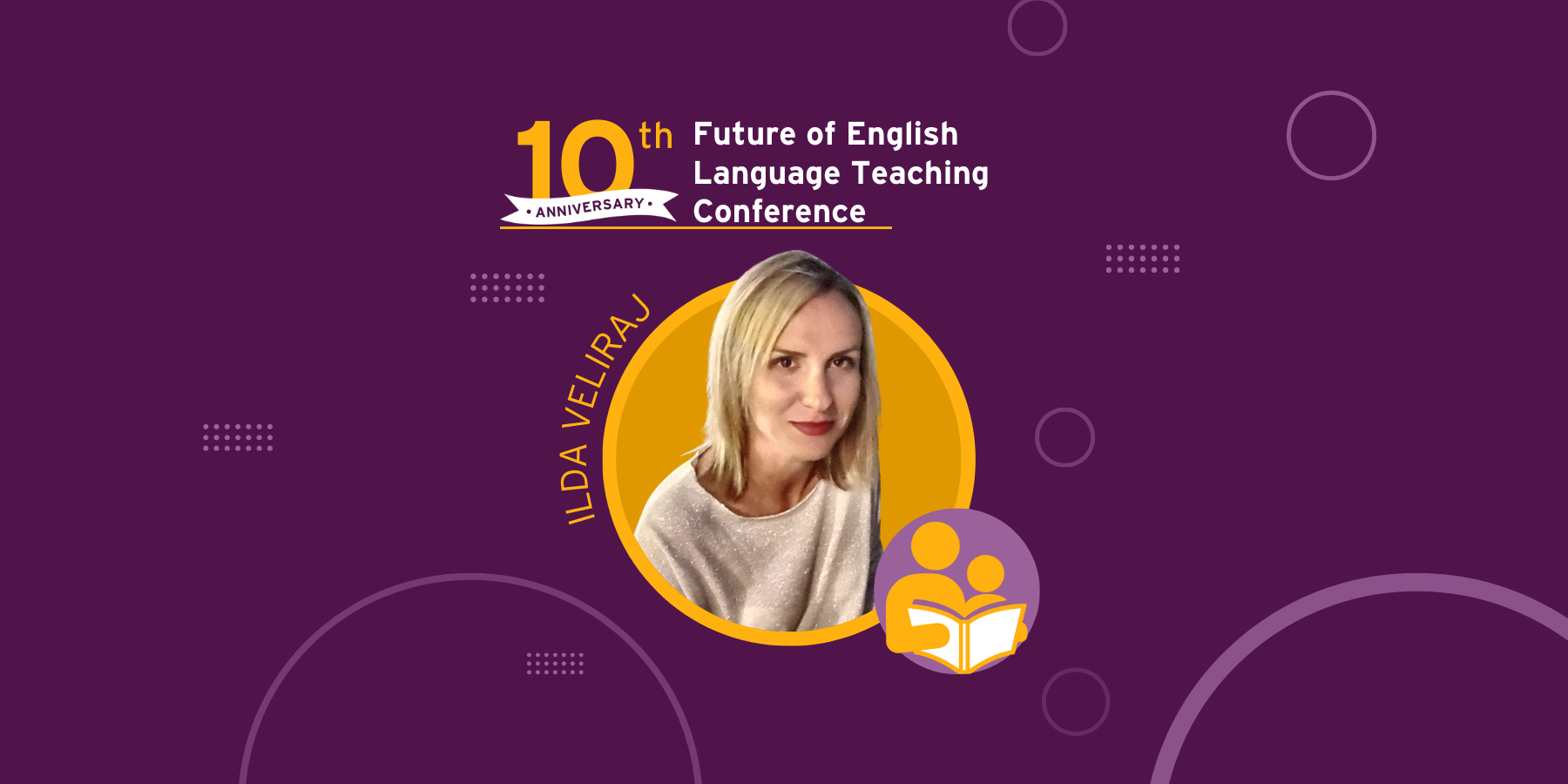
At this year’s Future of English Language Teaching (FoELT) conference, Ilda Veliraj explored how teachers can effectively support learners who are navigating two foreign languages at once. Her session focused on practical methodologies, classroom strategies, and teacher development practices that promote bilingual growth in complex multilingual settings.
Ilda Veliraj is an English and Italian teacher at Paolo Ars Genius Bilingual School in Tuscany, Italy. With over ten years of experience in language teaching and a Master’s degree in Law, she has worked with students from around the world—many of whom are not native speakers of either of the two languages used in her school’s bilingual curriculum.
Teaching in multilingual realities
Ilda began by highlighting the distinctive challenges of bilingual schools where neither language is the students’ mother tongue. In such environments, language learning is not just about acquiring English or the partner language; it involves developing metalinguistic awareness and cognitive flexibility in the absence of a strong linguistic base.
She noted that this dual learning process often requires additional cognitive effort from learners. Teachers must therefore balance content delivery with language support, carefully scaffolding lessons to ensure understanding and progress in both languages.
Understanding cognitive load in bilingual acquisition
Drawing on cognitive load theory, Ilda explained how the simultaneous processing of two linguistic systems can overwhelm working memory if tasks are not appropriately structured. Reducing unnecessary cognitive strain allows learners to focus on meaningful communication and language development.
She shared classroom examples illustrating how visual aids, simplified instructions, and gradual progression of task complexity can help maintain learner engagement and comprehension. By managing cognitive load effectively, teachers can enable learners to perform better academically while building language confidence.
Translanguaging as a bridge
A key part of Ilda’s approach is the use of translanguaging—the practice of allowing learners to draw on all their linguistic resources to make sense of new content. Rather than strictly separating the two target languages, translanguaging encourages flexible communication and supports deeper understanding.
Ilda described how students are invited to move naturally between English and the partner language to clarify meaning, discuss ideas, or complete group work. This approach validates learners’ linguistic identities while helping them internalise grammar and vocabulary more effectively.
She emphasised that translanguaging does not hinder accuracy; instead, it fosters fluency, confidence and intercultural competence, which are essential for success in bilingual environments.
Scaffolding for success
Ilda shared a range of scaffolding techniques used in her classrooms, including pre-teaching key vocabulary, modelling target structures, and using visuals and gestures to aid comprehension. She demonstrated how interactive activities such as storytelling, collaborative projects and bilingual reading tasks help bridge the gap between the two languages.
These methods ensure that learners can access content even when their linguistic repertoire is limited. Over time, this structured support helps them become more autonomous and confident bilingual communicators.
Supporting teachers in bilingual contexts
The session also focused on the professional challenges faced by teachers in dual-language schools. Ilda acknowledged that many educators must adapt to teaching in multicultural, multilingual environments without extensive formal preparation.
She stressed the importance of collaboration and reflective practice, encouraging teachers to share experiences and co-develop resources that address their learners’ unique profiles. Continuous professional development, peer mentoring, and open dialogue were identified as key tools for sustaining teacher wellbeing and pedagogical innovation.
Practical classroom strategies
Ilda presented several adaptable strategies for promoting engagement and comprehension in bilingual settings:
- Use visual organisers and graphic aids to reinforce new language and concepts
- Encourage peer teaching and collaborative tasks across language levels
- Integrate games and creative projects that allow learners to express ideas bilingually
- Provide clear learning objectives in both languages to enhance transparency and motivation
- Incorporate formative assessment and reflective tasks to track progress in both linguistic domains
These strategies empower learners to take ownership of their learning while maintaining an active connection between the two languages.
Key takeaways
|
Theme |
Key idea |
|
Dual-language learning |
Learners who are non-native in both languages need targeted scaffolding and flexible approaches. |
|
Cognitive load |
Managing cognitive effort helps learners stay focused and build confidence. |
|
Translanguaging |
Allowing movement between languages supports understanding and engagement. |
|
Teacher development |
Collaboration and reflection are vital for teachers in multilingual contexts. |
|
Inclusive practice |
Adaptable, learner-centred strategies enhance bilingual and biliterate growth. |
Final thought
Ilda’s session offered a powerful reminder that bilingual education is both a challenge and an opportunity. By understanding how learners think and communicate across languages, teachers can create classrooms that are inclusive, supportive and linguistically rich. Empowering students to use all their languages not only builds proficiency but also nurtures curiosity, empathy and global awareness—skills that extend far beyond the classroom.