AI and ethics in ELT: Tools, tasks and transformative pedagogy
AI and ethics in ELT: Tools, tasks and transformative pedagogy
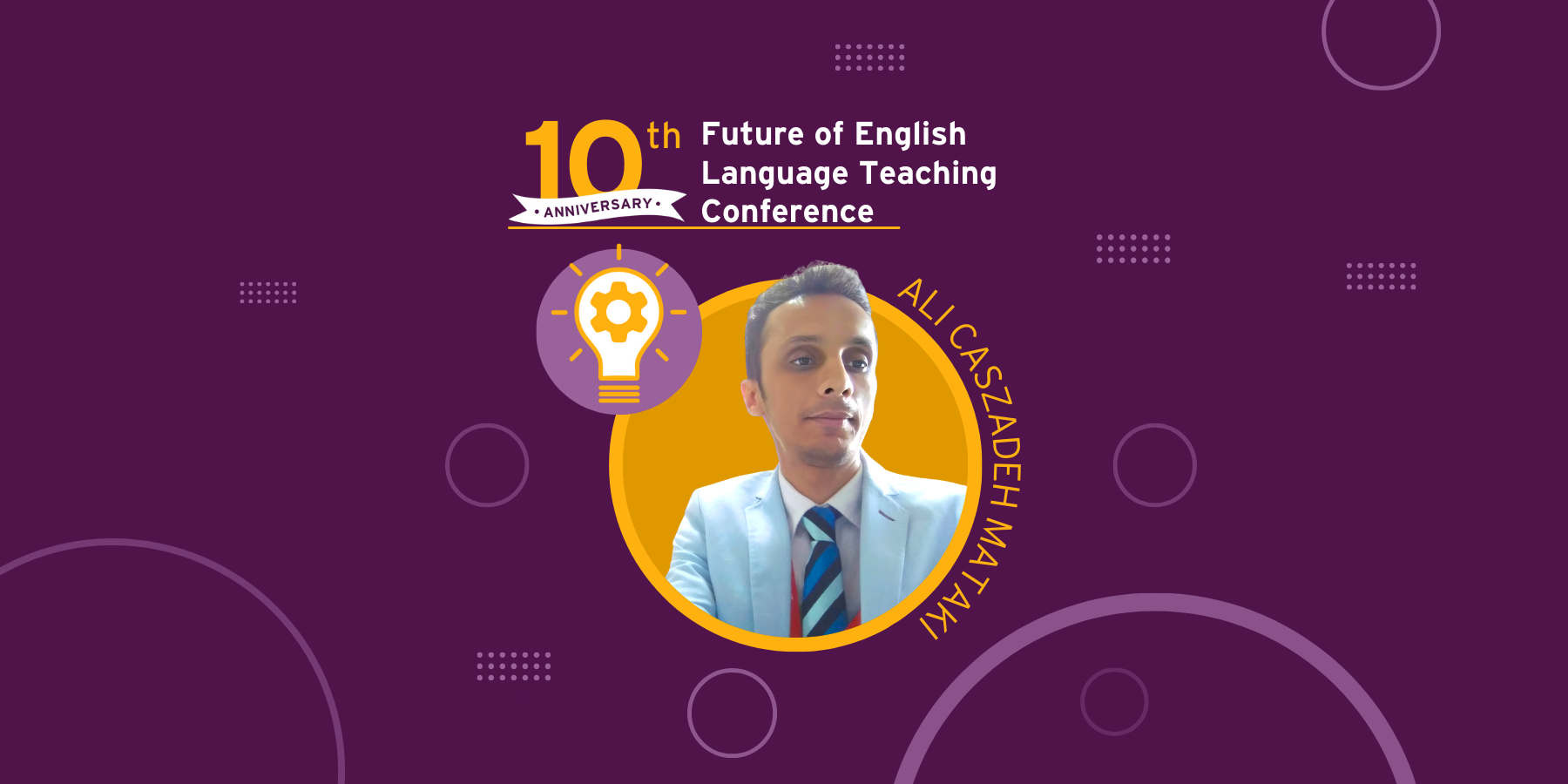
At this year’s Future of English Language Teaching (FoELT) conference, Ali Caszadeh Mataki presented a framework for embedding Artificial Intelligence (AI) ethically and effectively in the English language classroom.
Ali Caszadeh Mataki is a PhD candidate and Senior Instructor at the Middle East Technical University, Northern Cyprus. With more than 20 years of teaching and teacher-training experience, he specialises in post-method and transformative pedagogy, where he focuses on learner autonomy, motivation and engagement. His work explores innovative and inclusive models of teacher development, and he has presented at IATEFL SIG and FoELT events internationally.
Teaching learners to be ethical digital citizens
Ali began by reminding participants that the goal of integrating AI into English language teaching is not simply to adopt new technology, but to help learners become critical and ethical digital citizens.
Quoting Reiss (2021), he noted that as AI becomes increasingly present in education and society, teachers have a responsibility to prepare learners to engage with it responsibly. This means balancing technical proficiency with ethical awareness. In this framework you can encourage learners to question how AI shapes communication and decision-making.
A framework for ethical AI in the classroom
Ali shared a pilot framework designed to help teachers implement AI responsibly through clear pedagogical principles and classroom strategies. The framework is based on transformative pedagogy and critical digital literacy, and includes three key components:
- Scenario-based learning – learners engage with realistic AI-related situations that require discussion, reflection and ethical judgement.
- Reflective tasks – learners analyse their experiences and the implications of AI use, developing autonomy and critical thinking.
- Curricular integration strategies – teachers connect AI-related content to existing learning outcomes and skills development.
Together, these elements encourage learners to use AI not just as a tool for productivity, but as a subject for reflection, creativity and ethical exploration.

Early results and learner outcomes
The framework was piloted with 50 upper-intermediate EFL learners. Pre- and post-task evaluations showed encouraging results: approximately 30 per cent of participants were able to identify AI bias and ethical dilemmas more accurately after completing the activities.
Ali shared annotated samples of learner work, reflective outputs and infographics that illustrated the impact of the approach. These visual artefacts demonstrated how learners were beginning to question assumptions about AI and consider its broader social implications.
|
Theme |
Count |
Percent |
Exemplar Quote |
|
Hidden-bias awareness |
105 |
35.0% |
“The example left out people with disabilities, which I didn’t catch at first.” |
|
Language–Ethics linkage |
80 |
26.7% |
“I added ‘diverse’ instead of ‘various’ to highlight inclusivity.” |
|
Peer accountability |
66 |
22.0% |
“In triad discussion, I learned to describe the bias before the fix.” |
|
Future vigilance |
49 |
16.3% |
“I’ll apply the checklist to my emails before sending in the future.” |
Transformative pedagogy in practice
Transformative pedagogy, Ali explained, goes beyond knowledge transfer. It encourages learners to reflect, take ownership of their learning and connect classroom experiences to real-world contexts.
When combined with scenario-based learning, this approach enables learners to make meaningful decisions, consider diverse perspectives and integrate ethical reasoning into their language use. Teachers can act as people who create conditions for inquiry, rather than as sources of definitive answers.
Practical tools for teachers
Ali concluded by sharing a practical AI ethics toolkit for teachers. This includes:
- Templates for reflective tasks
- Guides for designing ethical scenarios
- Sample classroom activities that integrate AI responsibly
These resources help teachers promote a balanced approach that combines critical engagement with technology and ethical decision-making.
Key takeaways
|
Theme |
Key idea |
|
Ethical digital citizenship |
Learners should use AI responsibly and reflect on its social and ethical impact. |
|
Pedagogical framework |
Scenario-based learning, reflective tasks and curricular integration promote critical engagement. |
|
Transformative pedagogy |
Reflection and autonomy enable learners to connect classroom learning with real-world contexts. |
|
Evidence from practice |
Pilot study results show improved learner awareness of AI bias and ethics. |
|
Teacher support |
A practical toolkit offers templates and guidance for embedding AI ethically in lessons. |
Final thought
Ali’s session highlighted that embedding AI in the ELT classroom is not just about technology, but about values and human judgement. By applying transformative pedagogy and critical digital literacy principles, teachers can empower learners to think ethically, act responsibly and engage confidently with the technologies shaping our world.